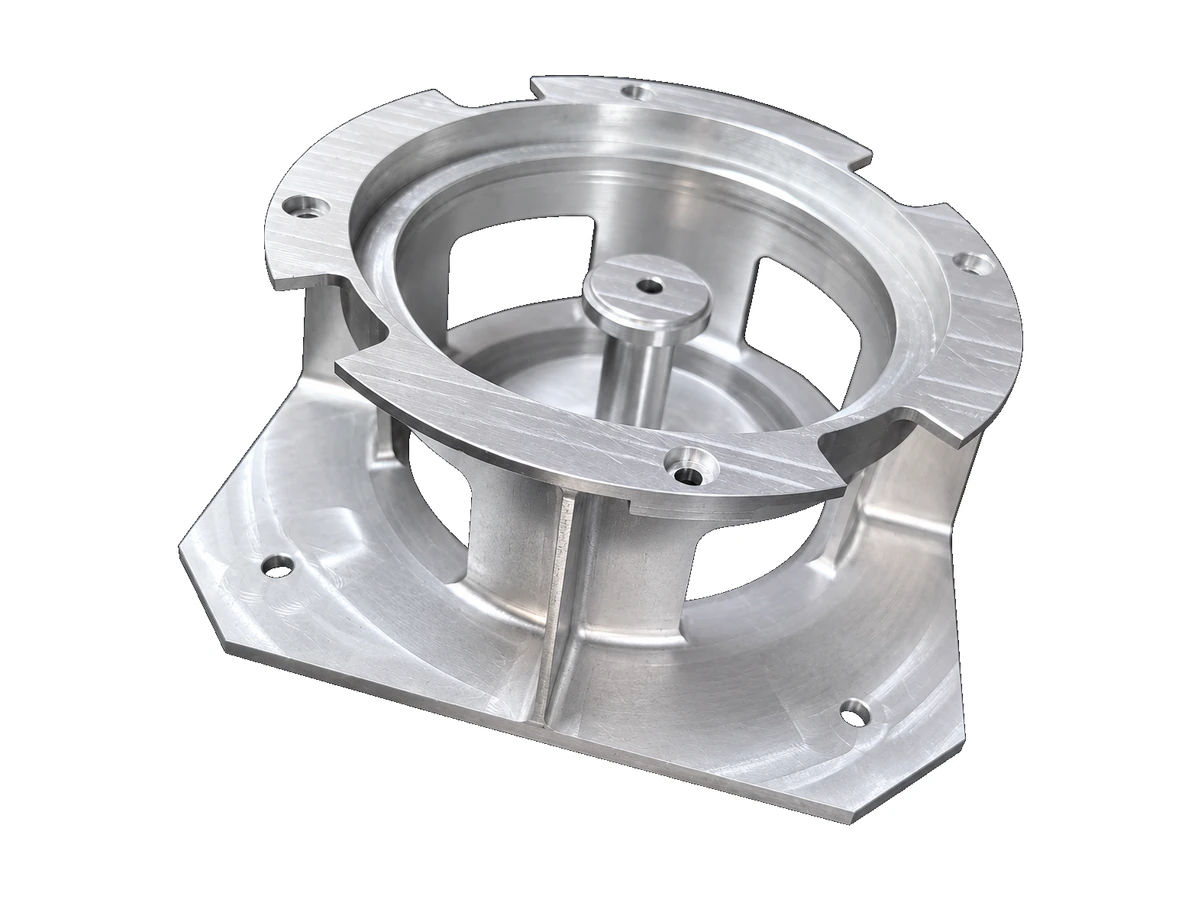
A five-axis process gives the cutting tool access to a part from different directions. The useful outcome is a machining strategy that connects angled features, complex contours and dimensional relationships. Not every part needs simultaneous motion: indexed machining and continuous five-axis machining are reviewed against the actual geometry.
At A Glance
| Review area | Typical considerations |
|---|---|
| Complex contours | Curved surfaces, impeller-style geometry and blended features |
| Multiple faces | Angled holes, pockets and features with linked datums |
| Setup planning | Clamping positions, tool reach and collision clearance |
| Inspection | A practical way to measure each critical characteristic |
A process selected for the geometry
We start by identifying the features that drive the machining strategy. A complex-looking model may be practical with indexed setups, while a continuous surface may need a different approach. The review considers tool access and part support together, before a production route is agreed.
Design information that makes the difference
A model describes the shape; the drawing describes acceptance. Highlight the datums, feature relationships, surface requirements and areas where tool marks are restricted.
- Mark critical surfaces and their inspection datums
- Identify thin walls, deep cavities and angled features
- State whether cosmetic surfaces may contain witness marks
- Confirm whether acceptance applies before or after finishing
From first part to repeat production
The first-piece review should establish the approved drawing revision, inspection method and any agreed concessions. For repeat orders, changes to the model, material or finish should be reviewed before the previous process is reused.
Frequently Asked Questions
Does every complex part require simultaneous five-axis machining?
No. The process is chosen after reviewing geometry, access and inspection requirements. An indexed setup may be suitable for some features.
Can you quote from a CAD model alone?
A model can start the discussion, but critical tolerances, datums, threads and finish requirements should also be supplied in a dimensioned drawing.
What accuracy can be offered?
The achievable and quoted tolerances depend on the part, material, size, setup and measurement method. They must be confirmed against the drawing.